

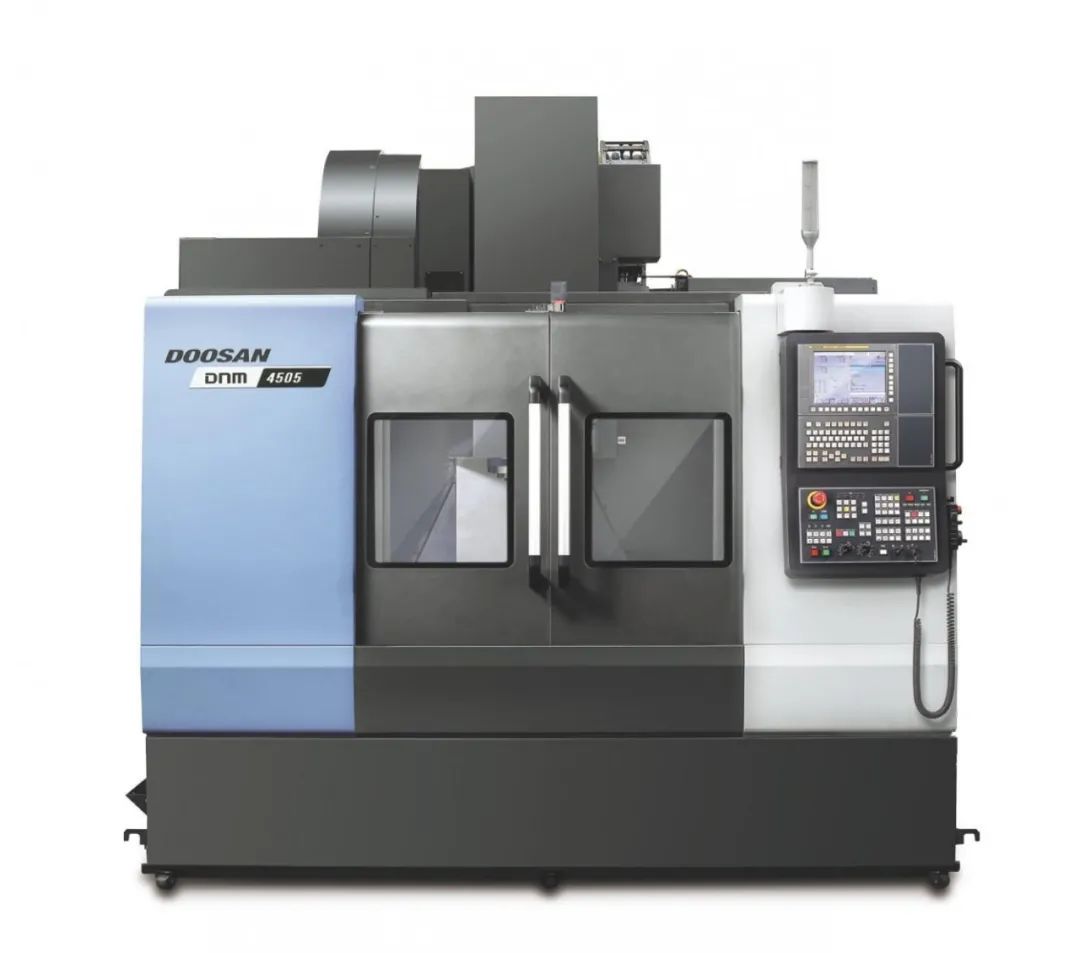
Reviewed by the UsedUltra Senior Equipment Inspection Engineering Team. Reviewer: Chief Inspection Engineer Chris — 12 years of used industrial equipment appraisal; 1,500+ CNC machines inspected, including 200+ covering Okamoto, Studer, Jung, and Chevalier.
Definition: Used CNC Machine Inspection = measuring a used CNC machine's current positioning accuracy, repeatability, reverse backlash, and spindle health with a laser interferometer and a ballbar, to determine a fair price and its remaining life.
Scope note: The four machines compared in this article belong to different machine size classes — the Doosan DNM 5700 is a "1000-class" machine with 1,050 mm X-axis travel; the Haas VF-2 and Mazak VC-Ez 20 are 762 mm class; the DMG MORI CMX 600 V is 600 mm class. "Comparable price" refers to representative models whose used-market transaction price bands roughly overlap, not a same-class comparison. Work backward from your required travels and table size, then compare machines within the same price band. Accuracy data comes from published specifications unless otherwise noted; inspect the actual condition before purchase.
When you buy a used CNC, the price gap is only part of the picture — what decides whether you make money is three things: how much geometric accuracy this machine still has, how many years it will keep running, and whether someone can fix it the day it breaks. Used Doosan machines win on the FANUC ecosystem plus a one-piece cast-iron base — parts are common, repair resources are broad, and the rigid base holds up well in used condition. Used Mazak and DMG MORI benefit from early active thermal compensation but cost more to repair. Used Haas machines win on the HFO service network. For any brand, inspection reports (ballbar + laser interferometer) answer "is it worth it" better than any brand name.
1. Three Pains of Buying Used CNC: Opaque Condition, Hard-to-Judge Remaining Life, No After-Sales Support
- Condition information asymmetry: The seller says "90% new, lightly used"; the reality can be a retired machine with 0.05 mm ball-screw backlash, noisy spindle bearings, and X-axis stick-slip. You pay "as-is" price and get a machine that needs about $7,000 in repairs before it will run.
- Remaining life is unclear: For a new machine, the question is how long factory accuracy holds; for a used one, the question is whether this unit can still hold IT7 tolerances — bed and guideway wear, roller-carriage preload, and spindle taper runout, none of which anyone measures for you.
- After-sales void: Many OEMs do not recognize used equipment; when it breaks, you cannot get support. Third-party repair teams vary widely — parts either take 48 hours or carry a 30% markup. The money you saved on the purchase price comes back two or three times over as repair labor and downtime within three years.
The comparison and inspection methods below are designed around these three variables — not against brochures, but against the inspection bench.
2. Four Used CNC Machines Compared on Hard Specs, and Selection Essentials
2.0 Used Doosan DNM 5700 vs Haas VF-2 vs Mazak VC-Ez 20 vs DMG MORI CMX 600 V — Spec Comparison Table
| Specification | Used Doosan DNM 5700 | Used Haas VF-2 | Used Mazak VC-Ez 20 | Used DMG MORI CMX 600 V |
|---|---|---|---|---|
| Machine class (X travel) | 1,050 mm (1000-class) | 762 mm | 762 mm | 600 mm |
| Original X/Y/Z travel (mm) | 1050 / 570 / 510 | 762 / 406 / 508 | 762 / 410 / 460 | 600 / 560 / 510 |
| Table size (mm) | 1300 × 570 | 914 × 356 | 1250 × 492 | 900 × 560 |
| Spindle taper | CAT40 (7:24 No. 40), optional BIG PLUS double-contact | CT40 | CAT No. 40 | CAT40 (7:24 No. 40) |
| Original spindle speed (rpm) | 8,000 (optional 12,000 / 15,000) | 8,100 | 12,000 | 12,000 (optional 15,000) |
| Spindle power (kW) | 11 / 18.5 (continuous/peak, FANUC-based) | ~16 continuous / ~22 peak (30 HP peak) | 11 (15 hp) | Standard ~9 (12 HP); high-torque option to ~13 / peak ~20 |
| Rapid traverse (m/min) | 36 / 36 / 30 | 25.4 | 36 (all axes) | 30 (all axes) |
| Positioning / repeatability (mm) | ±0.005 / ±0.003 ⚠️ | ±0.0051 / ±0.0025 ⚠️ | Not published ⚠️ | Not published ⚠️ |
| Tool capacity | 30 (optional 40 / 60) | 20 (optional 30 / 40) | 30 (optional 50) | 30 (optional 60) |
| CNC control | FANUC 0i-MF (also Mitsubishi / Heidenhain / Siemens options) | Haas NextGen | Mazatrol SmoothEz | Siemens 828D / Heidenhain (also FANUC option) |
| Machine weight (kg) | 6,500 | ~3,600 | ~3,800 | ~4,600 |
| Used repair resources | FANUC ecosystem — wide third-party repair, cheap parts | HFO official network, closed system | Mostly OEM-dependent, parts pricier | Mostly OEM-dependent, parts most expensive |
| Inspection focus (drives price) | Bed/guideway wear, roller-carriage preload | Spindle thermal drift, closed system | Thermal-compensation sensor health | Servo & thermal-compensation OEM dependence |
Footnotes: ① Accuracy values marked ⚠️ are from third-party aggregators, not official published specs — acceptance must be based on on-site measurement (laser interferometer / ballbar); ② Mazak VC-Ez 20 and DMG MORI CMX 600 V do not publish original positioning accuracy — do not infer their level from other machines in the table; ③ "Comparable price" means overlapping used-market price bands, not same-class comparison (see scope note).
2.1 Used CNC Accuracy Condition: Why Nameplate Accuracy Is Useless and Laser-Interferometer Measurement Is What Matters
A new machine's ±0.005 mm positioning accuracy is measured on a cold, unloaded, factory bench. The used machine you are buying has been running hot, under load, two shifts a day for four or five years. What sets the price is whether this machine can still hold your tolerance band today.
On site, these three values must be measured — all of them:
- Positioning / repeatability (laser interferometer XL-80, full travel) — reveals ball-screw wear and reverse backlash; directly determines hole-pattern consistency.
- Ballbar circularity, backlash, servo match, squareness (QC20) — circularity deviation >5 μm means adjustment or a price reduction.
- Spindle taper radial runout (μm) + 30-minute warm-up thermal growth — judges spindle bearing health and remaining accuracy life.
Important: The DNM 5700's published repeatability is ±0.003 mm (per aggregator). Do not value a used unit at the new-machine spec — use interferometer-measured backlash and full-travel repeatability. That is the basis for negotiation.
2.2 Why Used Doosan Machines Are More Economical to Keep Running: One-Piece Cast-Iron Base + FANUC Ecosystem
The core question for a used machine is "can it be repaired, and can you afford the repair." Doosan has the clearest advantage here:
- One-piece cast-iron base: cast iron's damping and vibration absorption slow guideway wear relative to lightweight structures, so used units typically retain geometric accuracy better — a pattern Chris has verified across 1,500+ inspections.
- CAT40 (7:24 No. 40) taper + optional BIG PLUS double-contact: double contact brings the flange and face into simultaneous contact, reducing tool deflection under heavy cutting versus single-contact tapers (such as Haas CT40). But inspection must emphasize taper runout — a worn double-contact spindle costs more to repair. Note: specific numeric claims such as "30% higher radial rigidity" vary across industry literature and are not an independent conclusion of this article; rely on measured taper runout.
- FANUC 0i ecosystem: the widest third-party repair coverage and the largest, cheapest used-parts supply globally. Whatever country the machine is in, mature independent service providers can repair it — the most valuable invisible asset of a used Doosan.
2.3 Used Mazak / DMG MORI: Better Active Thermal Compensation, but More Expensive to Repair
- The used premium of active thermal compensation: Mazak (Thermal Shield) and DMG MORI's symmetric thermal design, temperature-controlled spindles, and active compensation with temperature sensors usually keep thermal drift lower than passively cooled machines even at 6 years old — provided the sensors and compensation logic are still healthy.
- The cost of used repair: the systems (Mazatrol / Siemens 828D / Heidenhain) are closed; third-party repair resources are scarce and parts must go through OEM or authorized channels. A single fault can cost 2–3× more to repair than a Doosan. During inspection, verify the thermal-compensation sensors still work, or the "benefit" becomes "paying for a broken sensor."
2.4 Used Haas VF-2: Fast HFO After-Sales Response, but Thermal Drift Needs a Dedicated Inspection
- HFO (Haas Factory Outlet, worldwide): broad global coverage, fast response, on-shelf parts — the lowest after-sales anxiety for used Haas, and its biggest differentiator.
- Used thermal-drift risk: a lightweight structure and linear guideways drift more visibly in used condition. Inspection must include a warm-up test: measure cold, then after 30 minutes of running, and compare circularity — this directly exposes how much thermal stability margin remains.
3. Case Study: 12-Month Cost and Return of Buying Used Doosan DNM 5700 Machines
Industry background: An automotive parts machining shop (serving the global automotive supply chain) needed to add 2 production lines. With a budget of about $90,000 — enough for only 1 new machine of the same brand — it turned to the used market for 3 vertical machining centers.
Technical / energy bottleneck: It had already fallen into the "stripped machine" trap — a low-priced unit with 0.05 mm ball-screw backlash whose hole positions drifted, dropping first-pass yield to 85%, and costing about $5,600 in repairs just to make it run.
Custom solution: With the Chris team's inspection, the shop acquired 3 used Doosan DNM 5700 (5–7 years old, FANUC 0i-MF, one-piece cast-iron base). Each unit went through full-travel interferometer positioning retest, four-point ballbar checks, spindle taper runout, and a 30-minute warm-up thermal-growth test. One unit with excessive X-axis backlash was discounted on site; all three received roller-carriage preload adjustment and spindle bearing preloading.
12-month quantified results:
| Metric | Old line (aged machines) | Used DNM 5700 line (12 months) | Change |
|---|---|---|---|
| Utilization | 74% | 89% | +15 points |
| First-pass yield | 88% | 97.5% | +9.5 points |
| Cycle time | baseline | −15% | 36 m/min rapids + faster tool change |
| Downtime | baseline | −55% | FANUC parts availability, third-party repair coverage |
| Cost per machine | New ≈ $90,000 | Used ≈ $30,000 (~1/3 of new) | 3 used ≈ 1 new budget |
| Payback | — | ~10 months | from cycle-time + scrap + downtime gains |
The case above is an illustrative calculation based on typical industry data; the numbers illustrate methodology, not a specific transaction. Plug in your own tolerances, batch sizes, and downtime costs for a real estimate.
4. FAQ — Common Questions on Buying Used CNC
Q: What should I measure when inspecting a used Doosan CNC, and how do I avoid buying a "stripped machine"?
A: Four must-measure items + one hard requirement:
- Laser interferometer (XL-80): full-travel positioning and repeatability on all three axes; focus on reverse backlash.
- Ballbar (QC20): circularity, servo match, squareness; circularity deviation >5 μm means adjustment or discount.
- Spindle taper radial runout: check with a lever dial indicator to judge spindle bearing health.
- Warm-up test: measure cold, then after 30 minutes, compare thermal growth and circularity.
- Hard requirement: ask the seller for the original accuracy report, and write into the contract "acceptance is based on on-site measurement; if not met, discount or return." The core of avoiding a stripped machine is making every dollar correspond to measurable accuracy data.
Q: Comparing used Doosan with Mazak and Haas, whose remaining life is more secure?
A: Consider three dimensions:
- Bed/guideway life: Doosan's one-piece cast-iron base absorbs vibration and wears slowly; used remaining life usually beats Haas's lightweight structure.
- Spindle and ball-screw life: depends not on brand but on the previous owner's use and maintenance — measured taper runout and backlash are the real judgment.
- Repairability (the economic ceiling of life): Doosan's FANUC ecosystem has large parts flow and cheap repairs; Mazak/DMG closed systems cost more; Haas HFO has many outlets and fast response.
- Conclusion: within budget and at the same condition, used Doosan gives the best combined remaining-life/cost-per-repair; if there is an HFO near you, used Haas has less after-sales anxiety.
Q: How much spindle bearing life remains on a used Doosan CNC, and how do I judge it on site?
A: A three-step on-site check:
- Taper runout: lever dial indicator on the taper; runout >5 μm suggests bearing or taper wear.
- Listening for noise: run the spindle through speed ranges; a periodic whine or a grating sound is a red flag.
- Warm-up temperature: measure spindle housing temperature after 30 minutes; an abnormal rise suggests preload or lubrication failure.
- Conclusion: if all three pass, the spindle will likely run safely for 3–5 more years; otherwise, factor a spindle overhaul into the negotiation.
Q: How should I negotiate warranty and after-sales for a used CNC when the OEM won't recognize used equipment?
A: Three layers of protection:
- Dealer/inspection-company warranty: use a qualified used-equipment dealer or inspection firm (e.g., UsedUltra) and write "acceptance by on-site measurement + warranty period (e.g., 6–12 months)" into the contract.
- Third-party repair agreement: sign up a local FANUC or general third-party repair team in advance, locking response time and labor rates.
- Parts stock: for FANUC systems, pre-stock servos, ball screws, bearings, and other wear parts; for closed systems, require the seller to provide proof of OEM repair channels.
- Conclusion: an OEM not recognizing used equipment is not the problem — having no second and third layer of protection is.
Q: How do I control export inspection, shipping, and international logistics risk when buying a used Doosan CNC across borders?
A: Five risk points for cross-border used-CNC purchases:
- Original documents and provenance: ask for the year of manufacture, Final Inspection Report, or authorized-dealer documents to avoid a "refurbished machine passing as original."
- Pre-shipment third-party inspection: commission an independent firm (e.g., UsedUltra / SGS) for a laser-interferometer + ballbar retest at the seller's site, and obtain an English inspection report as the payment and negotiation basis.
- Export compliance and destination customs: confirm the machine is not subject to export controls or dual-use rules, obtain export customs documents, and confirm import duties, origin-based tariff preferences (e.g., RCEP/FTA), and import permits at the destination.
- Shipping and handling insurance: insure full sea freight + handling for a precision CNC; specify wooden-crate packaging and anti-vibration standards; use specialized machinery logistics for large units.
- On-arrival retest and claims: retest acceptance (repeatability + taper runout) on arrival and compare with the pre-shipment report as the basis for claims against the seller or logistics provider.
Q: Why do the four machines in the comparison table differ so much in travel and table size yet are called "comparable price"?
A: This is a key point to understand:
- The four machines are not same-class: DNM 5700 (X = 1,050 mm) > VF-2 / VC-Ez 20 (762 mm) > CMX 600 V (600 mm).
- "Comparable price" means used transaction price bands roughly overlap — condition, age, and wear can even create the inversion where an older larger machine costs less than a newer smaller one.
- The correct approach: set the travels/table you need → compare within the same class → negotiate with measured inspection data. For same-class comparisons, compare the DNM 5700 against other 1000-class units, and the VF-2 against the VC-Ez 20.